
Planting Instructions
1. Choose the Right Spot
-
Sun: Full sun in cooler climates; in hot summer areas, give them morning sun and light afternoon shade.
-
Soil: Well-drained, loamy soil is best. Avoid spots where water sits after rain.
-
pH: Slightly acidic to neutral (around 6.0–7.0) is ideal.
If your soil is heavy clay, mix in compost and some coarse material (like pine bark fines) to improve drainage.
2. Prepare the Soil
-
Clear weeds and grass in a circle at least 2–3 feet wide.
-
Work in 2–3 inches of compost or well-rotted manure into the top 8–10 inches of soil.
-
Rake the area smooth.
3. Spacing
-
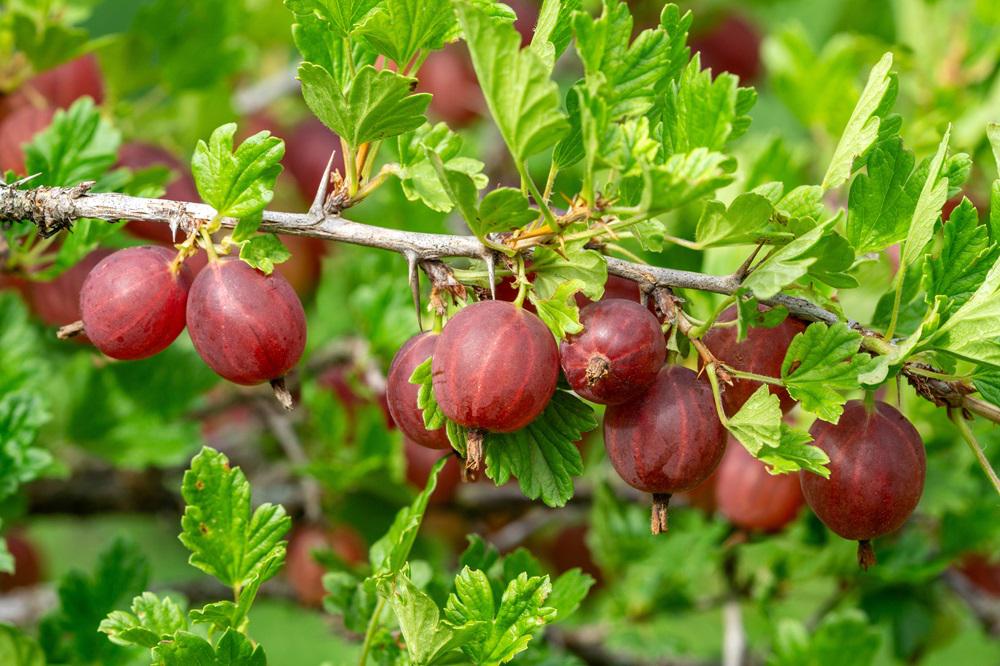
Space Pixwell gooseberries 3–4 feet apart in the row.
-
If planting multiple rows, keep rows about 6 feet apart so you can move around them easily.
4. Planting Bare-Root Gooseberries
-
Hydrate the roots:
-
Soak bare-root plants in a bucket of water for 30–60 minutes before planting.
-
-
Dig the hole:
-
Make a hole wide enough to spread the roots out naturally, and deep enough so the crown (where roots meet stems) will be about 1–2 inches below soil level.
-
-
Position the plant:
-
Set the plant in the hole, gently spreading the roots outward and downward.
-
-
Backfill:
-
Fill the hole with your improved soil, firming gently as you go to remove air pockets.
-
Make sure the plant sits at the correct depth (crown just below soil level).
-
-
Water in:
-
Water thoroughly to settle the soil around the roots.
-
5. Planting Potted Gooseberries
-
Water the pot well before planting.
-
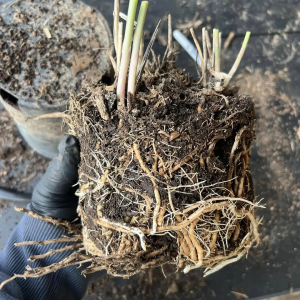
Slide the plant out and gently loosen any circling roots.
-
Dig a hole as deep as the pot and about twice as wide.
-
Set the plant so the soil level in the pot is even with the surrounding soil (you can go up to 1 inch deeper if you want extra stability).
-
Backfill, firm lightly, and water deeply.
6. Mulch and Watering
-
Add 2–3 inches of mulch (shredded bark, straw, or leaves) around the base, keeping it a couple of inches away from the stems.
-
Keep soil consistently moist, not soggy, especially during the first growing season.
-
Aim for a deep watering 1–2 times per week, depending on heat and rainfall.
-
7. First-Year Pruning & Care
-
Right after planting, you can lightly prune long shoots back to 4–6 buds to encourage branching and a bushier plant.
-
Remove any dead, broken, or rubbing stems.
-
In the first year, focus on root and plant establishment rather than heavy fruiting. If it sets a lot of berries, you can remove some to reduce stress on the plant.
8. Ongoing Maintenance
-
Keep the area weed-free so the gooseberry does not compete for water and nutrients.
-
Refresh mulch each year.
-
Water during dry spells, especially in summer.