
Planting Instructions
1. When to plant
-
Cool and temperate climates: Early spring, as soon as the soil can be worked and is no longer waterlogged.
-
Mild winter areas: Late winter to very early spring. Some people also plant in fall where winters are very mild and soil does not freeze.
Asparagus is a long term crop. A well planted bed can produce for 15 to 20 years, so it is worth doing the setup carefully.
2. Choose and prepare the site
Sunlight
-
Choose a full sun spot, at least 6 to 8 hours of direct sun daily.
Soil
-
Well drained soil is essential, asparagus hates sitting in water.
-
Ideal pH is 6.5 to 7.5.
-
Work in plenty of compost or well aged manure. A deep, rich bed gives better spears for years.
Bed prep
-
Remove all weeds, grass, and roots from the planting area.
-
Loosen soil 12 to 18 inches deep if possible.
-
Mix in:
-
Several inches of compost
-
A balanced organic fertilizer, something like 5-5-5 or similar, according to label directions.
-
3. How deep and how far apart
Trench and spacing
-
Dig a trench 10 to 12 inches wide.
-
Depth:
-
6 inches deep in heavier clay soils.
-
8 inches deep in light or sandy soils.
-
-
Space crowns 12 to 18 inches apart in the trench.
-
Space rows 3 to 5 feet apart if you are planting more than one row.
4. Setting the crowns
-
Optional soak: Put the crowns in a bucket of lukewarm water for 15 to 30 minutes before planting, to rehydrate them.
-
In the bottom of the trench, make a small ridge or mound of soil about 2 to 3 inches high along the center.
-
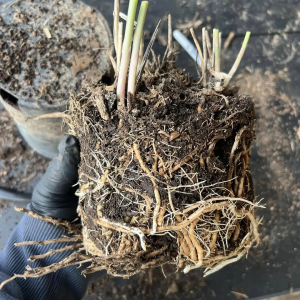
Place each crown on top of the mound, with the bud side up and roots spread out like a star or octopus over the ridge.
-
Cover the crowns with 2 to 3 inches of loose soil. Do not fill the trench completely yet.
-
Water thoroughly to settle the soil.
5. Gradually filling the trench
As the plants grow, you will slowly fill in the trench.
-
When shoots grow 4 to 6 inches tall, add another 1 to 2 inches of soil around them.
-
Repeat this process every time the shoots gain some height, until the trench is completely filled and level with the surrounding soil.
-
This gradual filling helps the crowns establish deep, strong roots.
6. Watering and mulching
Watering
-
Keep the bed consistently moist, especially in the first year.
-
Aim for roughly 1 inch of water per week, from rain or irrigation.
-
Avoid waterlogging. Good drainage is important.
Mulch
-
After the trench is mostly filled, apply 2 to 3 inches of mulch such as straw, shredded leaves, or wood chips.
-
Mulch helps with:
-
Weed control
-
Moisture retention
-
Protecting shallow new roots
-
Keep mulch a small distance away from young shoots so they are not smothered.
7. Weeding
-
Hand weed regularly, especially the first couple of years, so the asparagus does not have to compete.
-
Avoid deep hoeing near the crowns, since roots are close to the surface.
8. Fertilizing after planting
-
In early summer of the planting year, apply a light dose of balanced fertilizer or compost around the plants and water in.
-
Each spring after that, before new spears emerge, top dress with compost and a balanced fertilizer again.