Osage Planting Instructions Potted
Osage Blackberry Planting Instructions
-
Pick the spot: full sun (at least 6 to 8 hours), good airflow, and soil that drains well. Avoid low spots that stay wet.
-
Water the plant first: soak the 1/2 gallon pot so the root ball is evenly moist before you transplant.
-
Dig the hole: make it about 2 times as wide as the pot and about the same depth as the root ball. You want the plant to sit at the same soil level it was in the pot.
-
Loosen the roots: slide the plant out of the pot. If roots are circling the edges, gently tease them apart, and rough up the outside of the root ball a bit.
-
Set the plant: place it in the hole so the top of the root ball is level with the surrounding soil. Do not bury the crown deeper than it was in the pot.
-
Backfill and firm: refill the hole with native soil, gently press it down to remove air pockets, and shape a shallow watering ring around the plant.
-
Water deeply: water slowly until the soil is soaked 6 to 8 inches deep. If the soil settles, add a little more soil to keep the same planting height.
-
Mulch: add 2 to 3 inches of mulch around the plant to hold moisture and reduce weeds. Keep mulch a couple inches away from the stem to prevent rot.
-
Early support: put in a small stake or start a simple trellis line now so new canes have something to lean on as they grow.
-
Aftercare (first 2 to 4 weeks): keep the soil consistently moist, not soggy. Water when the top 1 to 2 inches of soil feel dry. Avoid heavy fertilizing right away, and focus on steady watering while it establishes.
Description
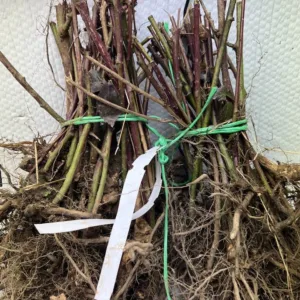
Please note: The plants will likely be removed from pot with excess dirt knocked away for shipping. Plant roots will be placed into a plastic bag to keep the soil together.
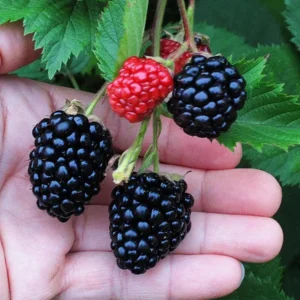
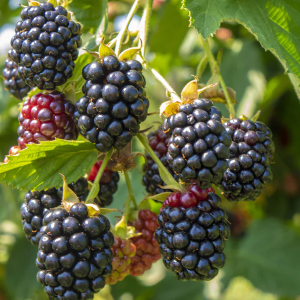
Osage blackberry is a thornless, upright blackberry variety bred for reliable production and easy picking. It grows as a strong cane-forming plant that benefits from a simple trellis system, and it typically fruits on second-year canes (floricanes) in early to mid-summer. The berries are medium-sized, glossy black, and known for a sweet, classic blackberry flavor with a firm texture that holds up well for fresh eating and short-term storage.
Osage performs best in full sun with well-drained soil and consistent moisture, especially during flowering and fruit fill. Like most blackberries, it responds well to annual pruning to keep rows tidy and to encourage healthy new canes for next season’s crop. It is often recommended for growers who want a thornless plant that stays relatively manageable, produces uniform fruit, and delivers dependable yields year after year.
-
Grow zones: USDA Zones 5 to 9
-
Mature size: About 4 to 6 feet tall, 3 to 5 feet wide (can be longer with trellis training)
-
Growth habit: Thornless, upright to semi-erect canes, often grown on a simple trellis
-
Fruiting habit: Floricane-fruiting (produces on second-year canes)
-
Harvest window: Early to mid-summer (timing varies by region)
-
Fruit: Medium-sized, glossy black berries, sweet blackberry flavor, firm texture
-
Yield: Typically high and consistent once established
-
Sun needs: Full sun for best growth and fruit production
-
Soil needs: Well-drained soil, moderate fertility, prefers slightly acidic to neutral pH
-
Water needs: Regular watering, especially during bloom and fruiting, avoid waterlogged roots
-
Pollination: Self-fertile, no second variety required
-
Pruning basics: Remove spent fruiting canes after harvest, thin and tip-prune new canes to encourage branching
-
Support: Recommended, keeps canes upright and fruit cleaner, makes harvest easier
-
Cold and heat notes: Good heat tolerance, winter hardiness improves with good site selection and cane management