Description
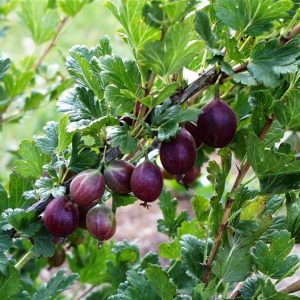
The Jeanne Gooseberry is widely considered one of the most delicious varieties available on the market today. Like the ‘Jeanine’, this is a modern, nearly thornless variety that was bred specifically to eliminate the difficulties of growing older gooseberry types.
What sets Jeanne apart is its incredible sugar content. It is often marketed as a “dessert” berry because it is sweet enough to be eaten straight from the bush, much like a grape. It also boasts superior disease resistance, specifically against powdery mildew and leaf spot, ensuring the plant keeps its leaves green and healthy late into the season.
Flavor Profile & Uses
-
Taste: Exceptionally sweet and aromatic. It has a thin skin and a juicy texture that lacks the gritty mouthfeel of some older varieties.
-
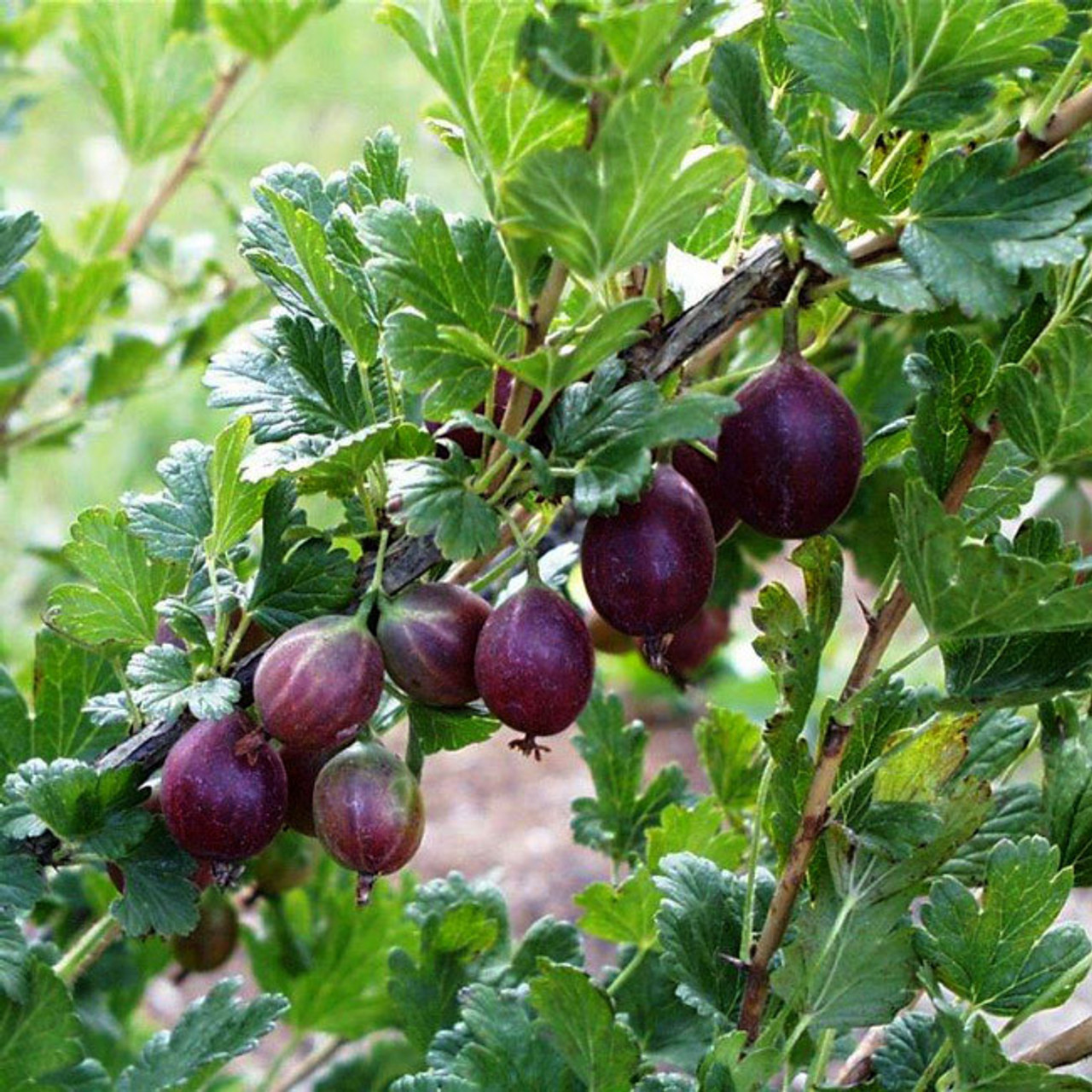
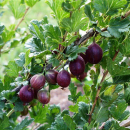
Fruit Size: Large, oval berries that turn a deep, dark red when fully ripe.
-
Kitchen Use: While it makes excellent jams and pies, the high sugar content makes it the best choice for fresh eating. It is also excellent for freezing.
Plant Characteristics
-
Hardiness Zones: 4–8.
-
Growth Habit: Upright, vigorous, and compact. It has a tendency to hold its fruit well on the branches without dropping them prematurely.
-
Mature Height: 3–4 feet tall and wide.
-
Sun Exposure: Full Sun to Partial Shade. (Partial shade is beneficial in regions with very hot summers).
-
Pollination: Self-fertile. No other plant is needed to produce fruit, though bees love the small flowers.
Growing & Maintenance
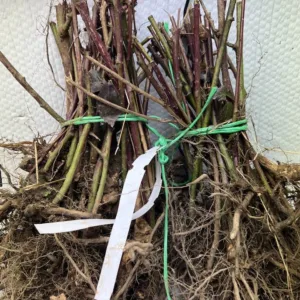
Planting Your Bare Root Bush Plant the Jeanne Gooseberry early in spring. Dig a hole wide enough to spread the roots out comfortably. It is beneficial to plant them slightly deeper than they were in the pot or nursery row, as this encourages the bush to send up new canes from the base, keeping the plant vigorous for years.
Soil Requirements This variety thrives in fertile, loamy soil that drains well. It does not tolerate waterlogged soil. Incorporating compost at the time of planting will help retain the moisture these shallow-rooted plants need while providing necessary nutrients.
Watering & Mulching Because gooseberries root near the surface, they are sensitive to drying out. Regular watering is essential, especially during the fruit-set period in late spring. A thick layer of organic mulch is critical for success; it keeps the root zone cool and moist, which mimics the plant’s natural woodland edge habitat.
Pruning Jeanne is vigorous and should be pruned annually in late winter. Remove any crossing branches or wood that is touching the ground. To maintain the largest fruit size, cut out the oldest stems (those over 4 years old) at the base to make room for younger, more productive canes.
Harvest Tip Jeanne is a mid-season variety (usually ripening mid-July). Wait until the berries are fully red for the maximum sugar content. Unlike some varieties that must be picked immediately, Jeanne holds onto its fruit well, giving you a slightly longer harvest window.