
Planting Instructions
-
Choose the right spot
-
Full sun is best (at least 6–8 hours of direct sun per day).
-
Pick a well-drained area and avoid low, soggy spots to prevent root rot.
-
-
Prepare the soil
-
Loosen the soil 12–18 inches deep and about 2 feet wide.
-
Mix in compost or aged manure to improve drainage and fertility.
-
Aim for slightly acidic soil with a pH around 6.0–6.8 if possible.
-
-
Spacing your plants
-
Space plants about 2–3 feet apart in the row.
-
Leave 8–10 feet between rows if you are planting more than one row, so you have room to walk and prune.
-
-
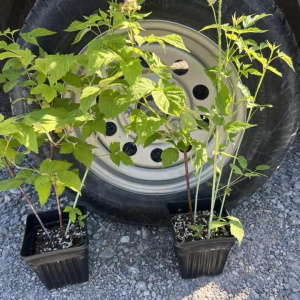
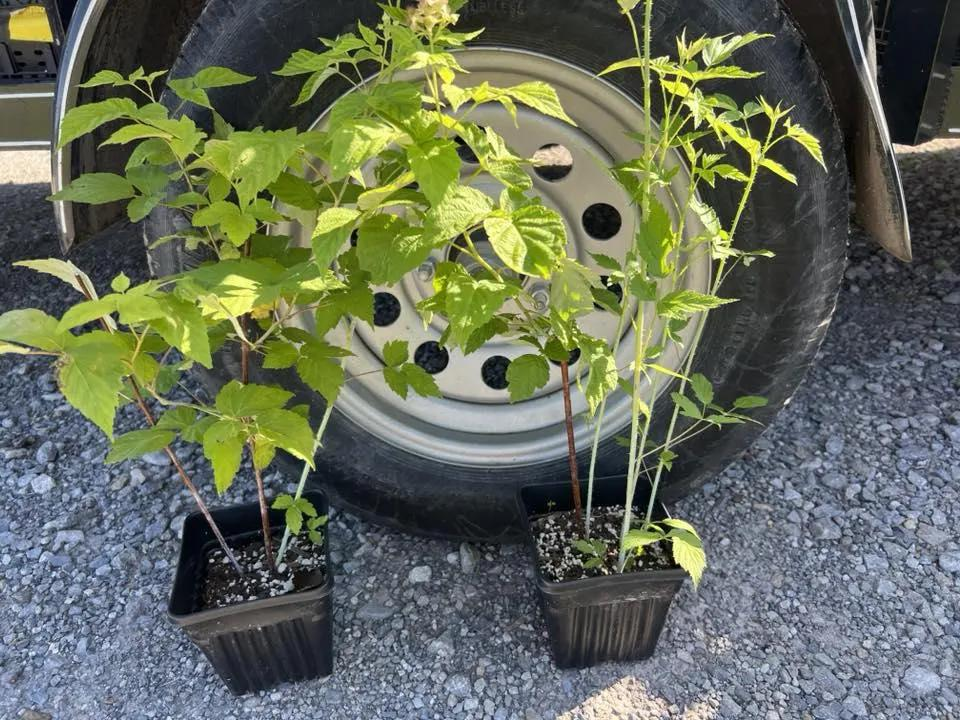
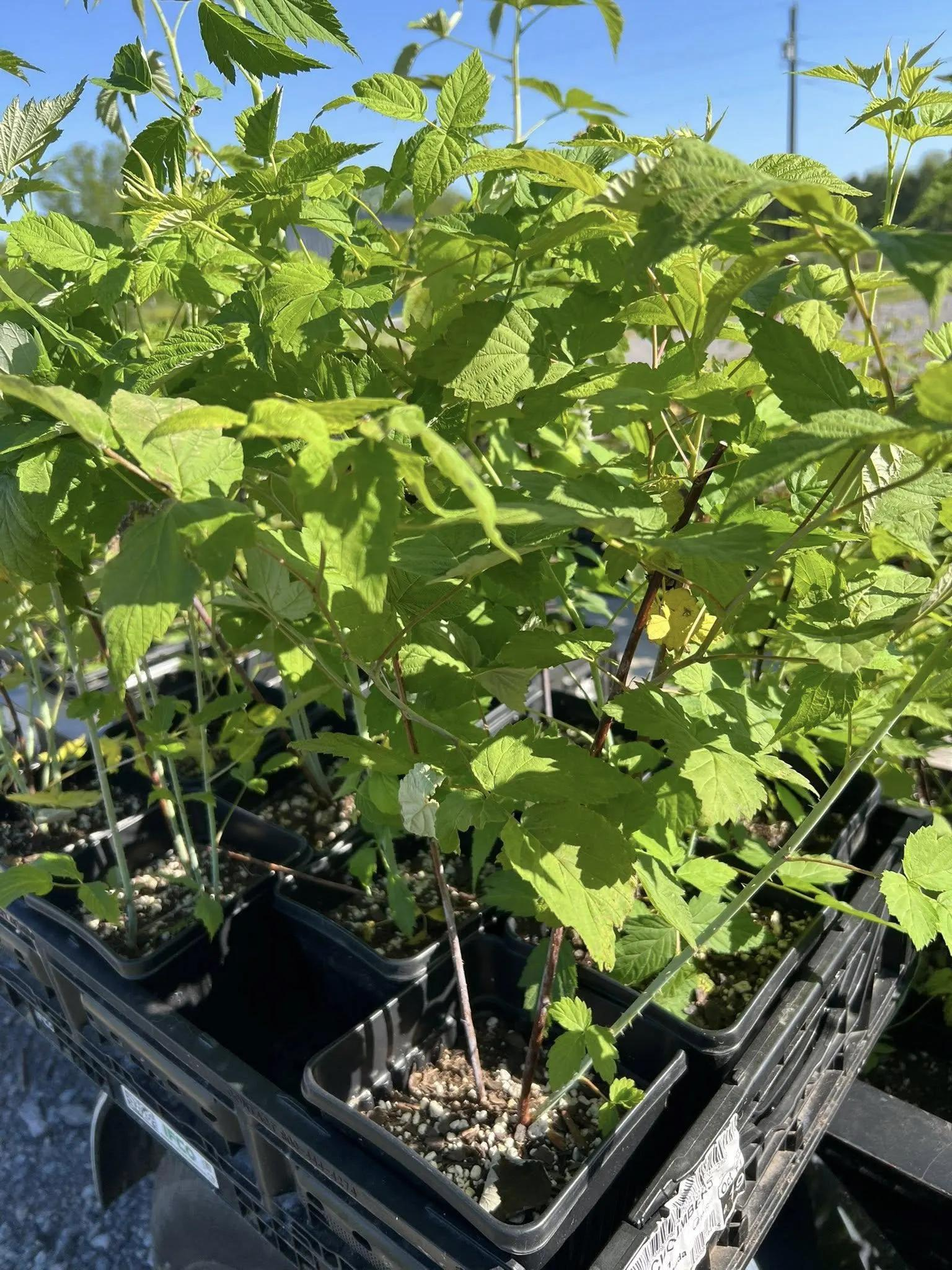
Planting the pot
-
Water the potted plant well before planting.
-
Dig a hole just a bit wider and the same depth as the pot.
-
Gently remove the plant from the pot, loosen any circling roots, and set it in the hole at the same depth it was growing in the container.
-
Backfill with soil, firm it gently around the roots, and water thoroughly.
-
-
Watering after planting
-
Keep the soil evenly moist, not waterlogged, for the first few weeks while the plant establishes.
-
After that, water deeply during dry spells so the top 1–2 inches of soil does not fully dry out.
-
-
Mulching
-
Add a 2–3 inch layer of mulch (wood chips, straw, or shredded leaves) around the base.
-
Keep mulch a couple of inches away from the canes to avoid rotting the crown.
-
Mulch helps hold moisture, keeps weeds down, and protects roots.
-
-
Support and pruning (basic first-year care)
-
Plan for a simple trellis or wire support once the canes grow taller.
-
In the first year, focus on getting the plant established. Remove any weak or damaged growth, but do not over-prune.
-
After the first full season, you can begin regular pruning: remove old canes that have fruited and thin out crowded canes each late winter or early spring.
-
-
Fertilizing
-
In early spring, apply a balanced fertilizer or compost around the plants, keeping it a few inches away from the canes.
-
Avoid heavy nitrogen, which can cause excessive leafy growth and fewer berries.
-