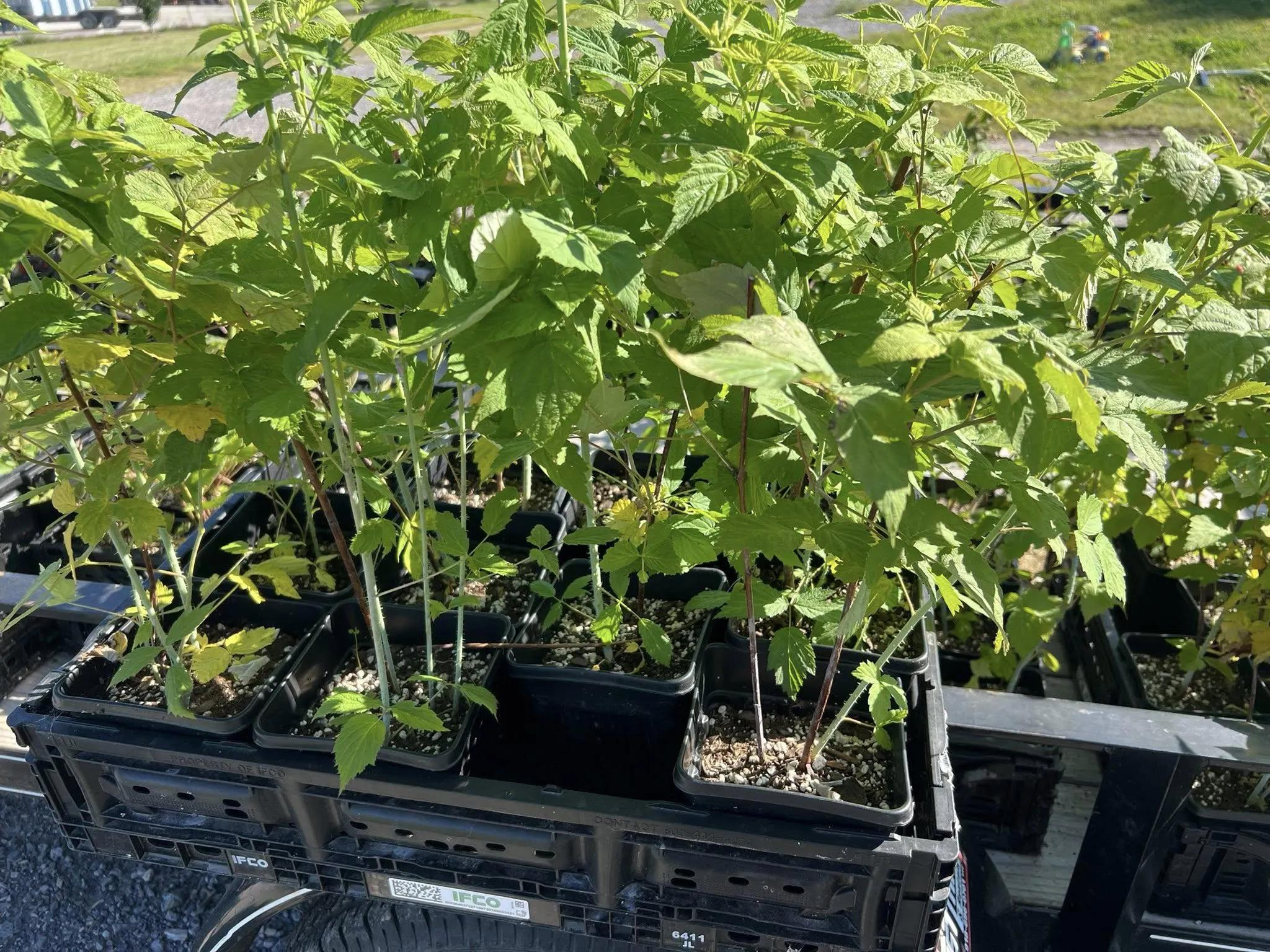
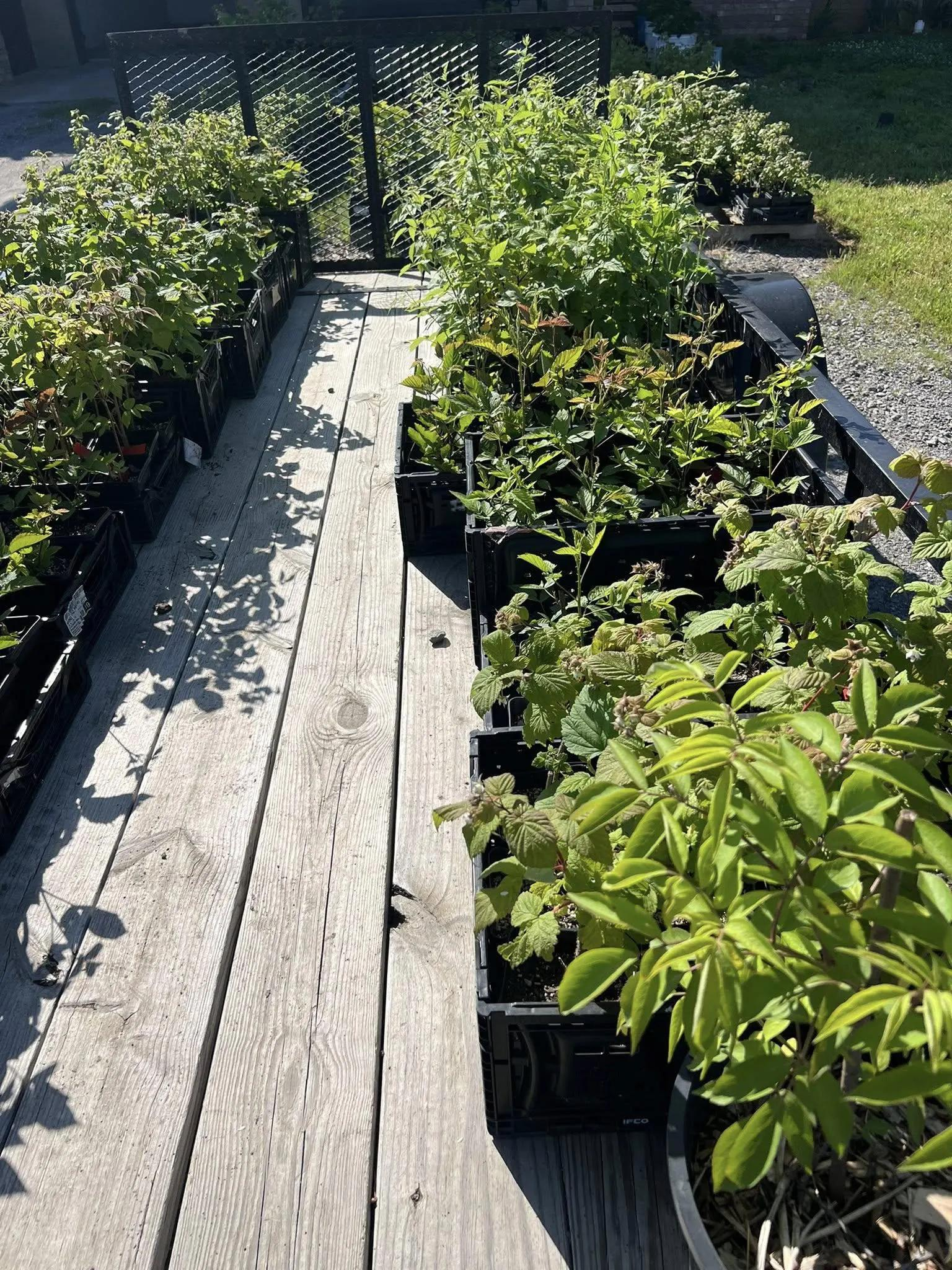

Description
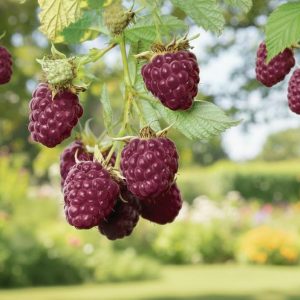
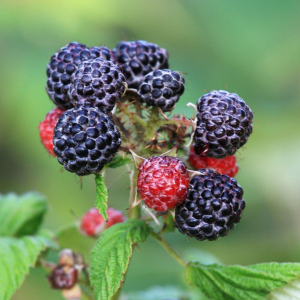
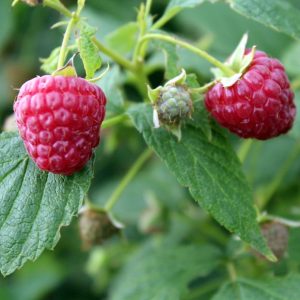
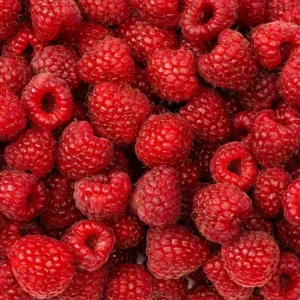
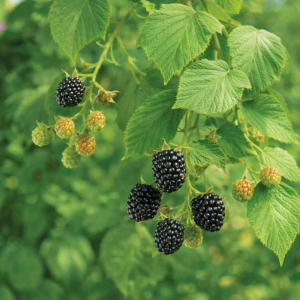
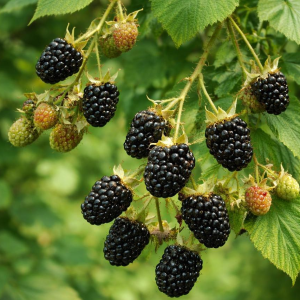
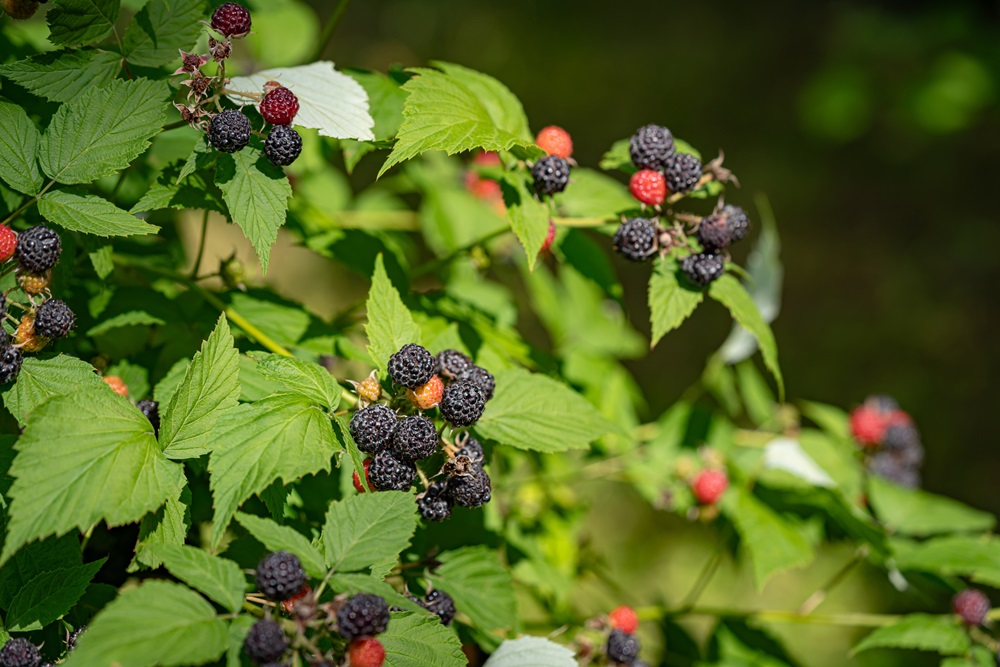
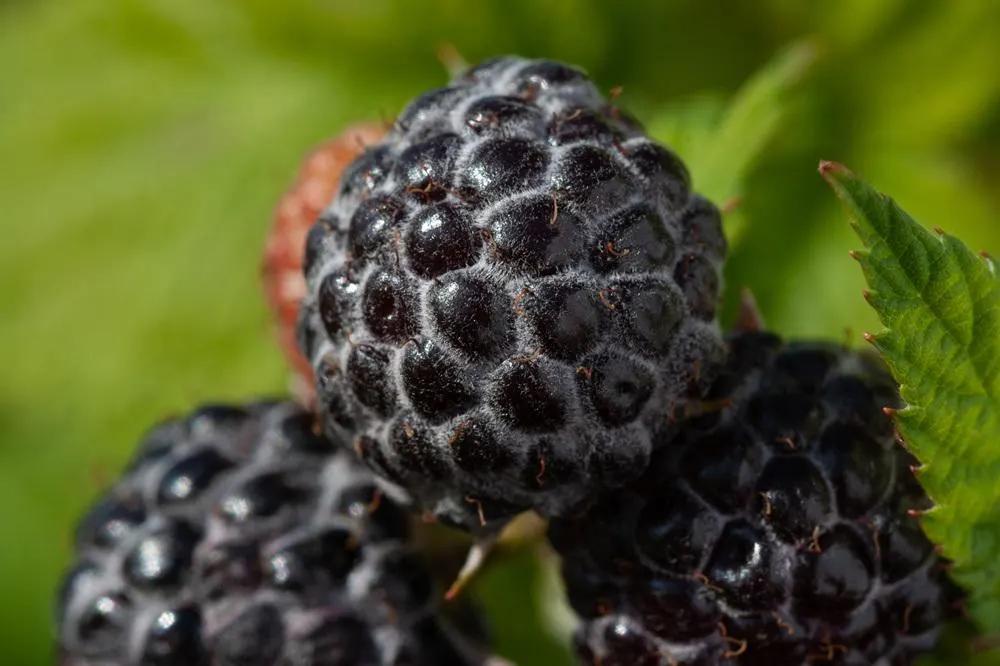
Cumberland black raspberry is a classic, cold-hardy bramble that’s known for deep purple to nearly black berries and a rich, sweet flavor. It’s a great choice if you want a raspberry with a more “wild berry” taste profile than most red varieties, and it’s especially popular for fresh eating, jams, syrups, pies, and freezing.
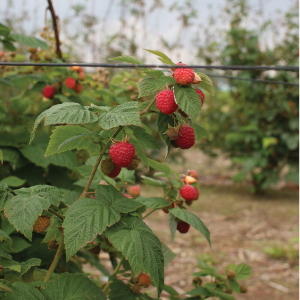
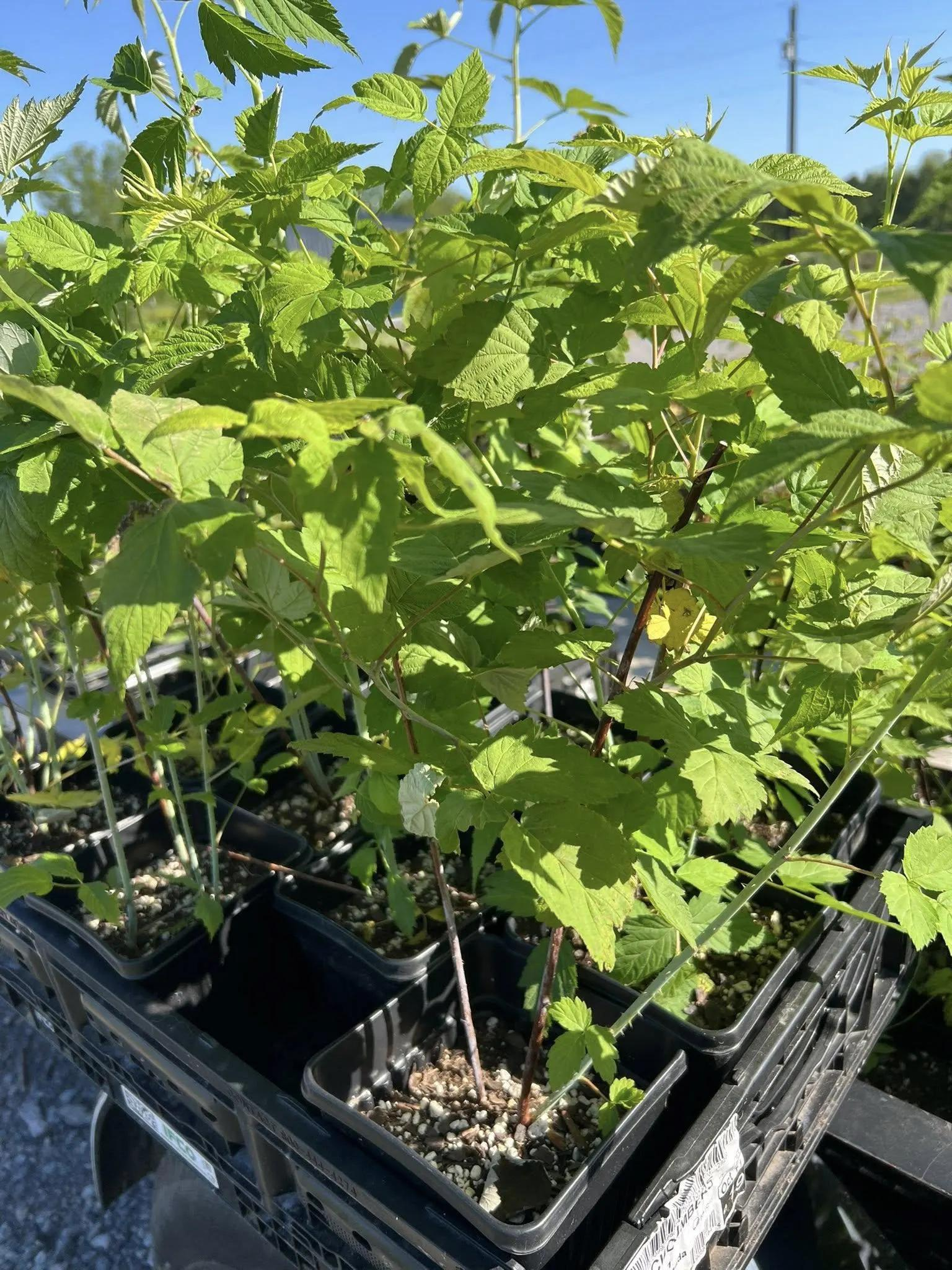
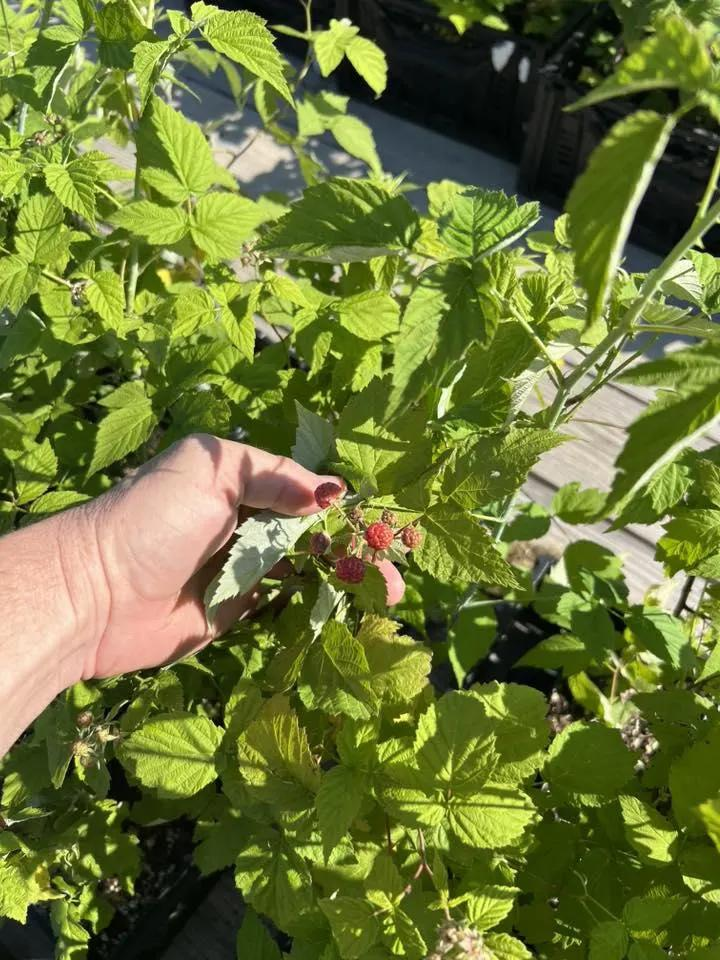
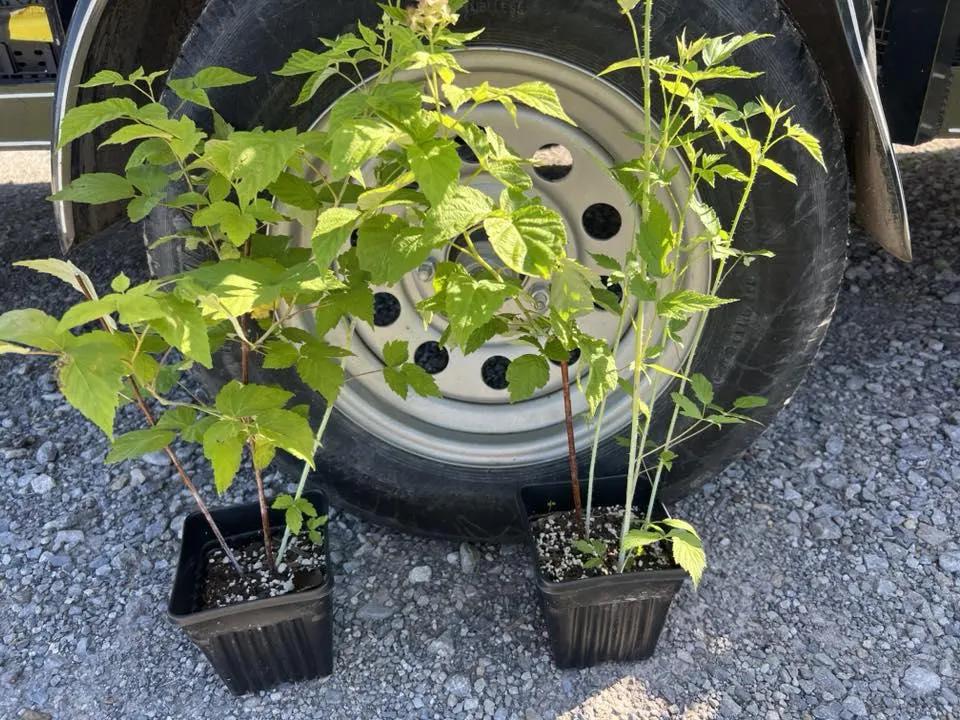
These plants grow as trailing canes rather than upright hedgerows. The canes benefit from a simple trellis or fence support to keep growth tidy and improve airflow. Like other black raspberries, Cumberland produces fruit on second-year canes (floricanes). That means the plant focuses on root and cane growth its first season, then rewards you with heavier crops once established. Expect harvest in early to mid-summer in most climates, with strong production when the planting gets full sun and consistent moisture.
Cumberland is a solid pick for gardeners in cooler regions because it handles winter well and bounces back reliably each spring. It prefers well-drained soil and does best with a thick mulch layer to hold moisture and reduce weeds. Routine pruning makes a big difference for yield and plant health, usually done by removing spent fruiting canes after harvest and managing new canes for next year’s crop.
Quick specs
-
USDA zones: 4–8
-
Sun needs: Full sun (best yields), tolerates light shade
-
Mature size: About 3–5 ft tall on support, canes can spread 6–10 ft if left unmanaged
-
Growth habit: Trailing canes, benefits from trellising
-
Fruiting type: Floricane-bearing (fruits on second-year canes)
-
Ripening window: Early to mid-summer (varies by region)
-
Fruit flavor: Sweet, rich, classic black raspberry taste
-
Spacing: Typically 3–4 ft between plants, 8–10 ft between rows
-
Care notes: Prefers well-drained soil, regular watering, mulch, and annual pruning for best production