Adams Elderberry Planting Instructions
Planting from small 2.5 inch pots into the ground:
- Pick a sunny spot with well drained soil. Space plants about 6 to 10 feet apart.
- Water the pot first.
- Dig a hole about twice as wide as the pot, and about the same depth.
- Slide the plant out. If roots are wrapped around, gently loosen them.
- Set the plant in the hole so the top of the root ball is level with the ground. Fill the hole back in with the same soil.
- Water slowly and thoroughly.
- Add 2 to 3 inches of mulch, but keep mulch a couple inches away from the stems.
- For the next 2 to 3 weeks, keep the soil lightly moist. After that, water deeply about once a week if it is not raining.
Description
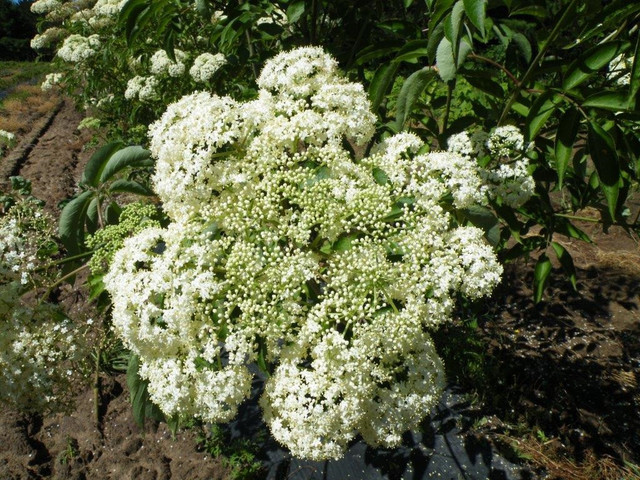
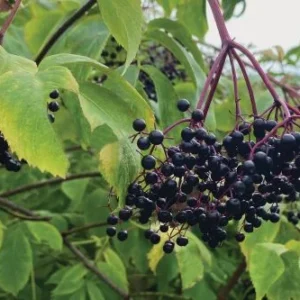
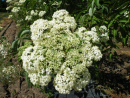
Adams elderberry is a classic American elderberry variety grown for dependable harvests and big clusters of dark berries. It’s a fast-growing, multi-stem shrub that works well in backyard rows or larger plantings, and it’s commonly used for syrup, jelly, juice, and wine. The berries ripen in late summer, turning deep purple to nearly black when fully mature. Elderberries are typically cooked before use.
Adams does best in full sun for the highest yields, but it can handle partial shade. It prefers soil that stays evenly moist, and it tolerates heavier soil better than many fruit shrubs, as long as the site does not stay waterlogged. For best fruit set, plant it near a second elderberry variety for cross-pollination. Prune in late winter or early spring by removing a few older canes to keep new growth coming, since elderberries fruit best on younger wood.
Quick facts
- Plant type: Deciduous fruiting shrub
- Mature size: Often around 6 to 10 feet tall and wide
- USDA zones: Commonly grown in Zones 3 to 9
- Pollination: Plant with another elderberry variety for best yields
- Harvest window: Late summer
- Fruit: Dark purple to black clusters
- Best uses: Syrup, jelly, juice, wine, freezing