
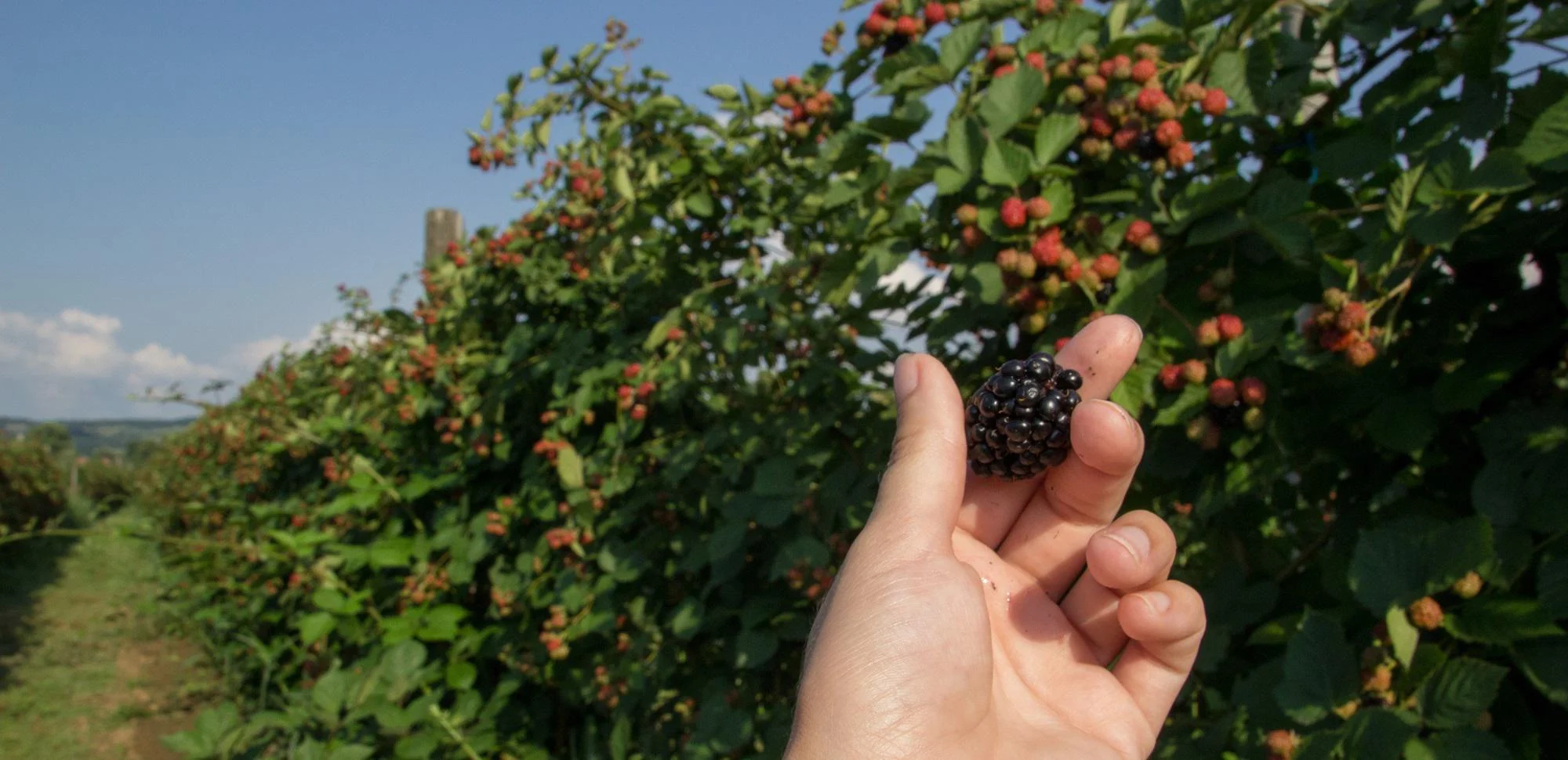
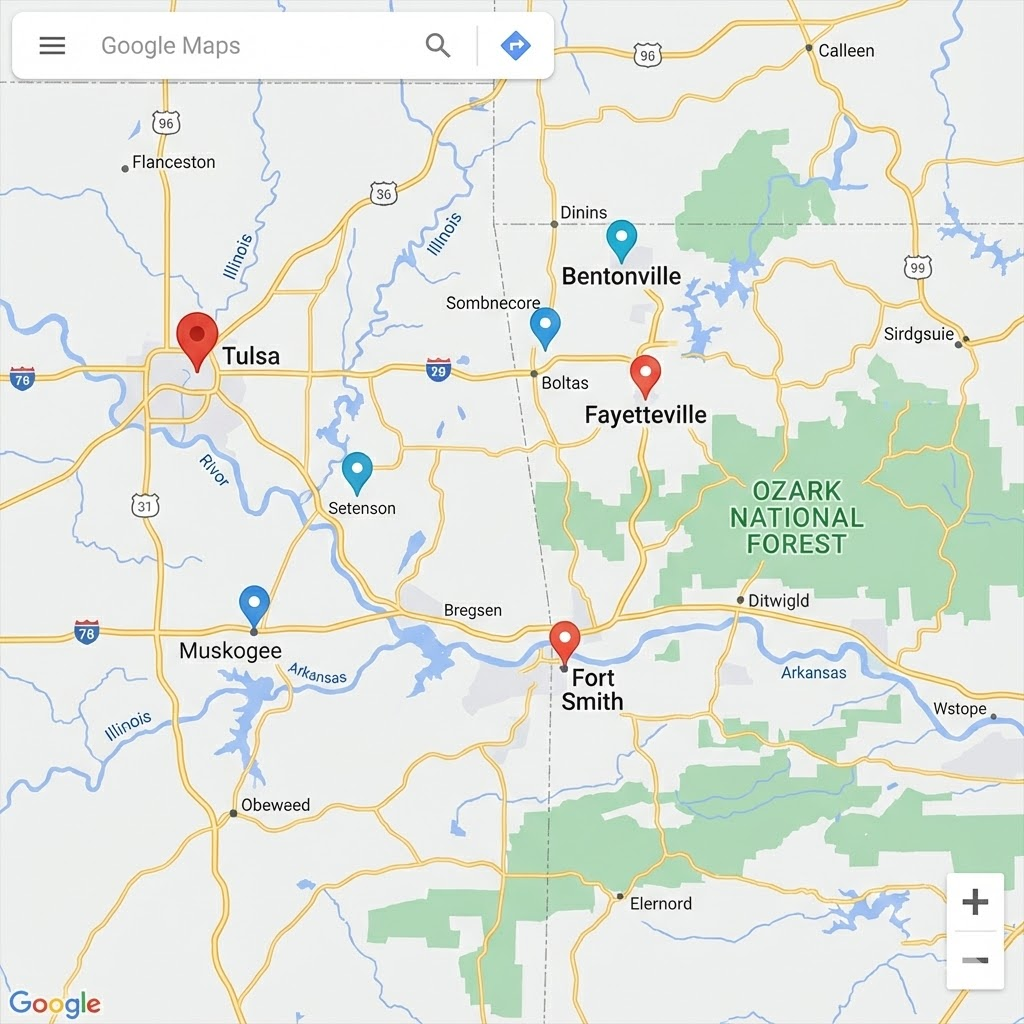
Here’s a region-smart short list built for Northeastern Oklahoma into Northwestern Arkansas where winters trend Zone 7a–7b, summers run hot and humid, and upland soils are often well-drained cherty silt loams with slightly acidic tops and dense subsoil layers. River bottoms carry deep silty alluvium that can stay wet after big rains. The picks below emphasize cultivars that handle heat, bear well, and fit your soils with minimal fuss. If ten blackberries are truly the best here, we lean into that. In practice, this region excels with University of Arkansas blackberry cultivars, plus elderberries that love the humidity, and rabbiteye blueberries if you are willing to acidify the soil.
Top 10 fruit bushes for 7a–7b
- Blackberry ‘Ouachita’
Thornless, erect habit, consistent yields, and reliable flavor in heat. Handles the quick-draining upland soils well if you mulch deeply. Good disease resistance keeps sprays light. Space 3 to 4 feet, single or double wire trellis for support. - Blackberry ‘Natchez’
One of the earliest ripening thornless types, which helps you dodge some peak summer scorch. Very large berries with good firmness for fresh eating and freezing. Give it sturdy canes and steady moisture during bloom and sizing. - Raspberry ‘Heritage’
Heritage raspberry is an upright, clump-forming cane plant that sends up new shoots from the crown, so it’s usually grown in rows with stakes, wires, or a simple trellis to keep the canes supported and easy to harvest. It thrives in cool to mild climates (roughly USDA Zones 4–8) with full sun and well-drained soil, and as an everbearing variety it typically fruits lightly in early summer on second-year canes, then produces a heavier main crop from late summer into fall on first-year canes. - Blackberry ‘Osage’
Compact plant that carries well-flavored fruit on thornless canes. It tolerates heat, keeps its firmness, and is less seedy than many older cultivars. Great for tight rows on upland ground where you want predictable harvests. - Blackberry ‘Prime-Ark Freedom’
Primocane-fruiting thornless blackberry. You get a summer crop on second-year canes and a late crop on first-year canes if summer isn’t extreme and moisture is steady. Useful for extending the season and recovering fruit after winter damage. - Blackberry ‘Apache’
Older but still dependable for large fruit and upright vigor. It tolerates the region’s swings if you manage water and keep rows mulched. A solid anchor cultivar if you want a hedge-like blackberry row. - Elderberry ‘John’s’
John’s elderberry is a vigorous, multi-stemmed shrub that forms a dense clump of canes, typically pruned to a bush or small hedge and grown with another compatible elderberry for best pollination. It generally thrives in USDA Zones about 4–8 in full sun to partial shade with moist, well-drained soil, and it produces clusters of white flowers in late spring followed by heavy crops of dark purple-black berries from late summer into early fall. - Elderberry ‘Wyldewood’
A strong partner to ‘Bob Gordon’. Vigorous canes, large flower cymes, and reliable production in hot summers. Elderberries appreciate organic matter and consistent moisture, especially on uplands where soils can dry between rains. - Rabbiteye Blueberry ‘Brightwell’
Rabbiteyes handle Southern heat better than northern highbush, but they need acid soil. Target pH 4.8 to 5.2 using elemental sulfur and peat or pine bark fines. ‘Brightwell’ sets well, resists cracking, and crops reliably once established. Always plant with a compatible partner for pollination. - Rabbiteye Blueberry ‘Powderblue’
Pairs beautifully with ‘Brightwell’ for cross-pollination and a long picking window. Heat tolerant with good berry quality. In your native 6.3 to 7.0 upland topsoils, plan on raised rows with pine bark, regular mulching, and drip irrigation to keep roots cool and evenly moist.
Site prep and planting keys for NE OK and NW AR area conditions
- Sun and airflow: Full sun with open airflow reduces disease pressure. Avoid tight pockets at the base of north slopes where cold settles in spring.
- Rows and spacing: For blackberries, set rows 10 to 12 feet apart, plants 3 to 4 feet apart. Elderberries can go 6 to 8 feet apart in the row. Blueberries need 4 to 5 feet in the row and 10 feet between rows due to the acidic bed you will build.
- Soil tuning:
- Upland beds: Work in 2 to 4 inches of compost across the row. For blueberries, build a dedicated acidic bed with pine bark fines, peat, and elemental sulfur blended months ahead.
- Bottomland sites: Plant a bit high, use raised beds or mounded rows, and add drains where water lingers.
- Mulch and water: Keep 3 to 4 inches of organic mulch to moderate heat and conserve moisture. Drip irrigation is ideal. Avoid wet-dry swings during bloom and fruit sizing.
- pH reality check: Blueberries fail here without low pH. Test, amend, and re-test. Rabbiteye types forgive heat but not alkaline soil.
- Pruning rhythm:
- Erect blackberries: After harvest, remove spent floricanes at ground level and thin primocanes to 4 to 6 per plant. Tip new canes at about waist height to encourage laterals.
- Elderberries: Remove a few oldest canes each winter to keep a mix of young, productive wood.
- Blueberries: Lightly thin twiggy growth and old, unproductive wood once plants are established.
Pollination and harvest windows
- Blackberries: Mostly self-fruitful. Stagger early, mid, and primocane types to harvest from early June into late summer depending on heat.
- Elderberries: Plant at least two varieties, such as ‘Bob Gordon’ and ‘Wyldewood’, for heavier crops in midsummer.
- Blueberries: Always plant at least two compatible rabbiteyes, for example ‘Brightwell’ with ‘Powderblue’, to tighten fruit set and spread ripening.
- Raspberries: Raspberries don’t like wet soil. Make sure the place you choose to plant your raspberries is a well-drained area. Standing water for more than a few hours is a big no-no. They will likely develop root rot and die.


